Volkswagen Virtus : You know that feeling when a car just clicks with Indian roads—potholes, highways, city chaos, and all? The Volkswagen Virtus delivers exactly that, blending German precision with everyday practicality.
As we hit early 2026, this midsize sedan continues to turn heads, especially with whispers of a facelift keeping enthusiasts buzzing.
A Design That Demands Attention
I remember the first time I spotted a Virtus zipping through Delhi traffic; its sleek lines cut through the clutter like a hot knife.
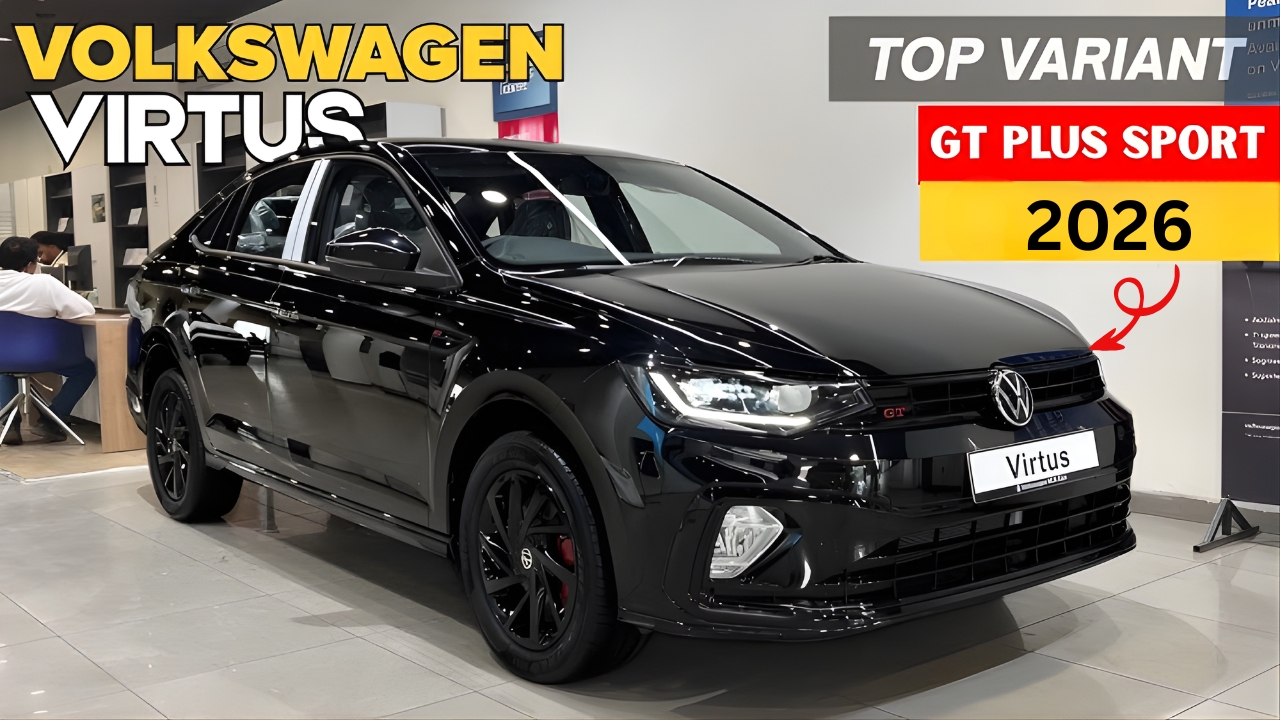
The current model rocks a bold front grille flanked by sharp LED headlights that light up the night without drama.
At 4561mm long with 179mm ground clearance, it laughs off speed breakers and monsoon puddles, making it a true desi warrior.
Side profiles scream sporty with 16-inch alloys (up to 17 on GT trims) and a coupe-like roofline that doesn’t sacrifice rear headroom.
Around back, those connected LED taillights give it a premium vibe, rivaling pricier Europeans. Colors like Wild Cherry Red or Deep Black Pearl pop under streetlights, ensuring you stand out without trying too hard.
Cabin Comfort Meets Tech Smarts
Slide inside, and the Virtus wraps you in a dual-tone haven—think soft-touch materials and ventilated front seats on higher trims that beat the summer heat.
The 10-inch touchscreen runs wireless Android Auto and Apple CarPlay smoothly, while a digital cluster lets you toggle views like a video game.
Ambient lighting sets the mood for night drives, and the panoramic sunroof (expected in facelift) floods the space with light.
Rear passengers get AC vents, USB ports, and 521 liters of boot space—perfect for weekend getaways or Diwali shopping hauls. It’s spacious enough for four adults, with ISOFIX points for the family crew.
Powertrains That Punch Above Weight
Under the hood, the 1.0L TSI turbo-petrol churns 115hp and 178Nm, mated to a slick 6-speed manual or torque-converter auto. It sips fuel at 20.8kmpl ARAI, ideal for city commutes where every rupee counts.
Crave more? The 1.5L TSI EVO unleashes 150hp and 250Nm with Active Cylinder Tech for efficiency—19.62kmpl claimed—and DSG auto with paddles for overtakes that thrill.
Zero to 100 flies in under 10 seconds, and highway cruising feels planted, even at triple digits. Real-world tests show 15kmpl mixed, proving VW’s tuning suits our fuel prices.
Safety First, Always
In a world of iffy roads, the Virtus’ 5-star Global NCAP rating (adult and child) is a badge of honor—six airbags standard, ESC, hill-hold, and TPMS keep you covered. Facelift rumors hint at Level 2 ADAS like adaptive cruise and lane assist, pushing it ahead of the pack.
Brakes bite hard, and that high ground clearance dodges underbelly scrapes. VW even endurance-tested it for India Book of Records—over 4600km non-stop—proving bulletproof build quality.
Priced Right for the Win
Starting at ₹10.5 lakh ex-showroom for base Comfortline, it climbs to ₹19 lakh for GT Plus Sport DSG—on-road Delhi around ₹22 lakh top-end.
That’s bang in the sweet spot against Hyundai Verna or Honda City, offering better dynamics without the fluff.
Facelift might nudge prices to ₹12-19.5 lakh with extras like sunroof and ADAS, but value stays king. Service costs are reasonable, and resale holds strong for a German badge in SUV land.
Also Read This : Mahindra Thar – 5 door fabulous design SUV with 4×4 off roading system, price is ₹9 Lakhs
Why Volkswagen Virtus Rules the Segment
Forget SUV hype; sedans like Virtus offer boot space, mileage, and fun factor SUVs can’t match.
It edges Verna on handling, City on safety, and Slavia on availability. Whether you’re a daily commuter or highway hawk, this car’s balance hooks you.