Toyota Innova Crysta : Every Indian family knows the name. The Toyota Innova Crysta isn’t just a vehicle; it’s a badge of reliability, a rolling statement of practicality wrapped in understated luxury.
Even as electric dreams and SUVs dominate headlines, this MPV soldiering on in 2026 refuses to fade, holding its ground in a market obsessed with the new.
Recent whispers from showrooms suggest minor tweaks for the new year, keeping it relevant without reinventing the wheel.
I’ve driven it across monsoon-soaked highways and Delhi’s chaotic streets, and it still feels like that dependable uncle who always shows up.
Bold Front, Familiar Stance
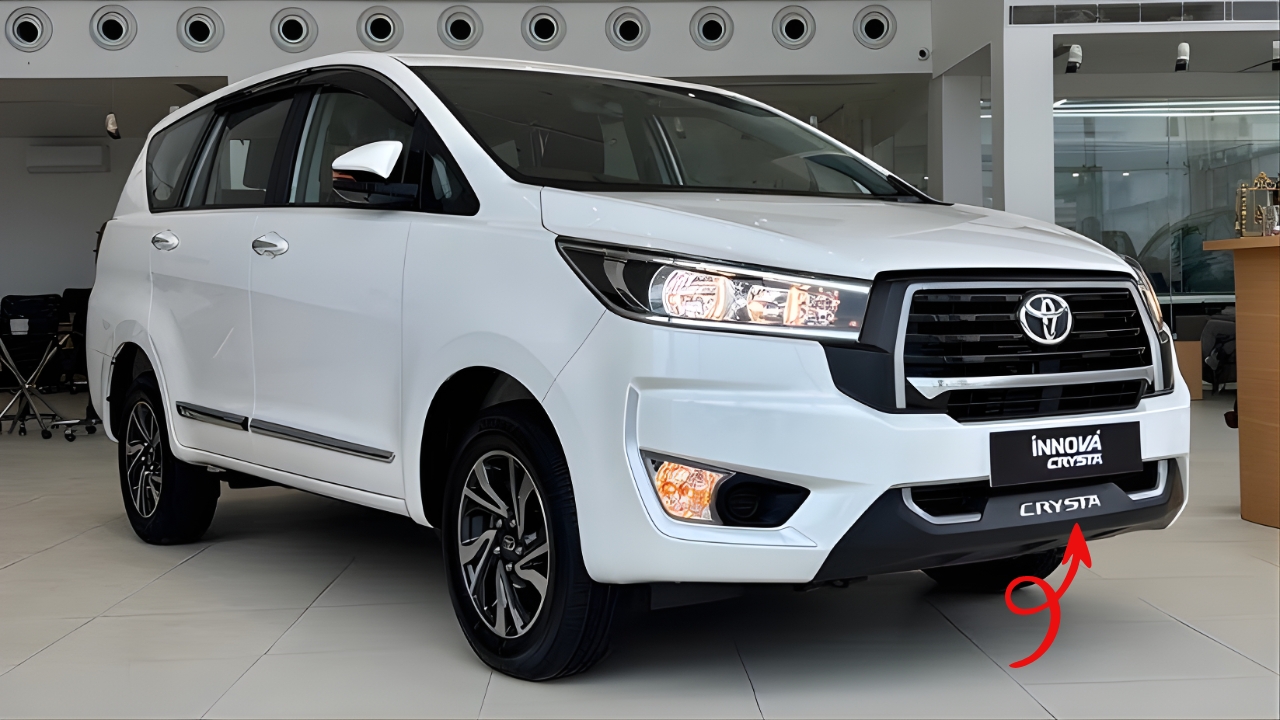
Pull up to any gathering, and the Crysta’s presence commands respect. That massive chrome-surrounded grille, now with sharper edges on higher trims, stares down the road like it’s daring traffic to blink first.
LED projector headlamps slice through fog and night, paired with DRLs that give it a modern glare, while 17-inch alloys on top variants hug the asphalt with quiet confidence.
The side profile? Timeless ladder-frame bulk, with subtle character lines that hint at its rugged bones without screaming for attention.
Rear LEDs wrap around neatly, and those vertical turn indicators add a quirky flourish that grows on you.
It’s not flashy like a Kia Carnival, but in India, where roads punish pretenders, this design screams “built to last.” Front sonar parking aids beep warnings for tight spots, a godsend in crowded bazaars.
Cabin That Feels Like Home
Slide inside, and the magic hits. Wood-finish panels and soft-touch dashes wrap you in premium vibes that punch way above the price tag.
Captain seats in the second row tumble with one touch, making third-row access a breeze for kids or elders. Leatherette on ZX trims feels plush, reclining just right for long hauls from Mumbai to Goa.
Ambient lighting casts a warm glow at night, and the upper glovebox chills your water bottles—small touches that make family trips bearable.
Multi-zone AC blasts cool air to every row, drowning out India’s summer fury, while a cooled console armrest keeps snacks fresh. Space? Cavernous. Even seven adults stretch out without elbows flying.
Fold the seats flat, and you’ve got cargo room for Diwali shopping sprees. It’s not sleek like a Velar inside, but it’s tougher, with suede-like fabrics that shrug off spills.
Tech That Keeps It Simple and Smart
No overwhelming screens here. The 9-inch touchscreen in top models hums with wireless Android Auto and Apple CarPlay, letting you stream maps or playlists seamlessly.
Voice commands handle calls and tunes, while a reverse camera with sensors makes parallel parking less of a prayer.
USB ports dot every row, and the 4.2-inch MID between dials spills fuel economy, tire pressure, and drive modes—Eco or Power, depending on your mood. Cruise control eases highway legs, and keyless entry with a push-start button feels effortless.
Connected tech pings your phone for service alerts, but Toyota keeps it straightforward—no subscription drama. In a world of glitchy infotainment, this setup just works, every time.
Powertrain Punch for Every Road
Under the hood, the 2.4-litre diesel GD series churns 148 horses and 343 Nm, mated to a slick 6-speed automatic or manual. It’s no rocket, but torque floods in low, perfect for laden overtakes on NH44.
Mileage hovers at 14-15 kmpl real-world, sipping fuel where rivals guzzle.
That body-on-frame chassis, with independent front and multi-link rear suspension, soaks up potholes like a champ. City crawls feel planted, highways stable even at triple digits.
Drive modes tweak throttle response, and hill-hold assists on ghats. Petrol’s gone by now, but diesel’s refinement—thanks to better insulation—cuts NVH to whispers. It’s not agile like a City, but load it with eight and it shrugs, grinning through the chaos.
Safety Net You Can Trust
Toyota doesn’t skimp here. Seven airbags blanket occupants, with curtain and knee options on flagships.
ABS, EBD, and VSC keep things glued in panic stops, while hill assist and traction control tame slippery monsoons. ISOFIX points secure child seats, and a high-strength cage crumples right where it should.
Speed-sensing door locks and seatbelt nags are standard, and rear sensors pair with that camera for urban armor. Euro NCAP-inspired tweaks mean it’s tougher than most in its class.
I’ve braked hard with a full load—no drama, just control. In India’s unpredictable traffic, this is peace of mind on wheels.
Pricing and Ownership Reality
Starting at ₹19.99 lakh ex-showroom for the base G, it climbs to ₹26.50 lakh for the ZX(O). On-road in Delhi? Around ₹23-31 lakh, depending on scheme.
Rivals like the Kia Carens undercut on features, but Crysta owns resale—₹10 lakh after three years, easy. Service? Predictable at ₹15-20k intervals, with Toyotas rarely stranding you.
Waiting lists stretch months, a testament to demand from cab fleets to wedding haulers. Variants wise, GX for basics, VX for value, ZX for bling.
It’s pricier upfront, but that bulletproof reliability pays dividends. Finance it at 9-10%, and EMIs feel fair for the status.
Also Read This : Xiaomi 14 Civi – 70W turbo charging smartphone come with circle design camera
Why Toyota Innova Crysta It Still Rules Indian Roads
The Innova Crysta endures because it gets India. Families pile in for vacations, businesses badge it for prestige, and it laughs at abuse.
Minor 2026 updates—like better LEDs and cooled storage—keep it fresh without alienating loyalists. Sure, it’s thirsty by EV standards, but diesel’s reign lingers where chargers don’t.
Against flashier imports, it wins on grit. If you’re eyeing one, test drive the auto—it’s the sweet spot. Toyota nailed the brief: space, safety, stamina.
In a segment of copycats, the Crysta remains the king, quietly carrying dreams across pothole paradise. Grab it before hybrids fully disrupt.