Maruti Baleno : Maruti Suzuki’s Baleno has quietly become one of the most sensible choices in the Indian hatchback segment, blending style, space and efficiency without turning into a show‑pony.
The 2026‑cycle Baleno builds on that reputation with sharper styling, a more organised cabin and smarter powertrain options, especially in petrol and CNG.
Style That Stays Neutral
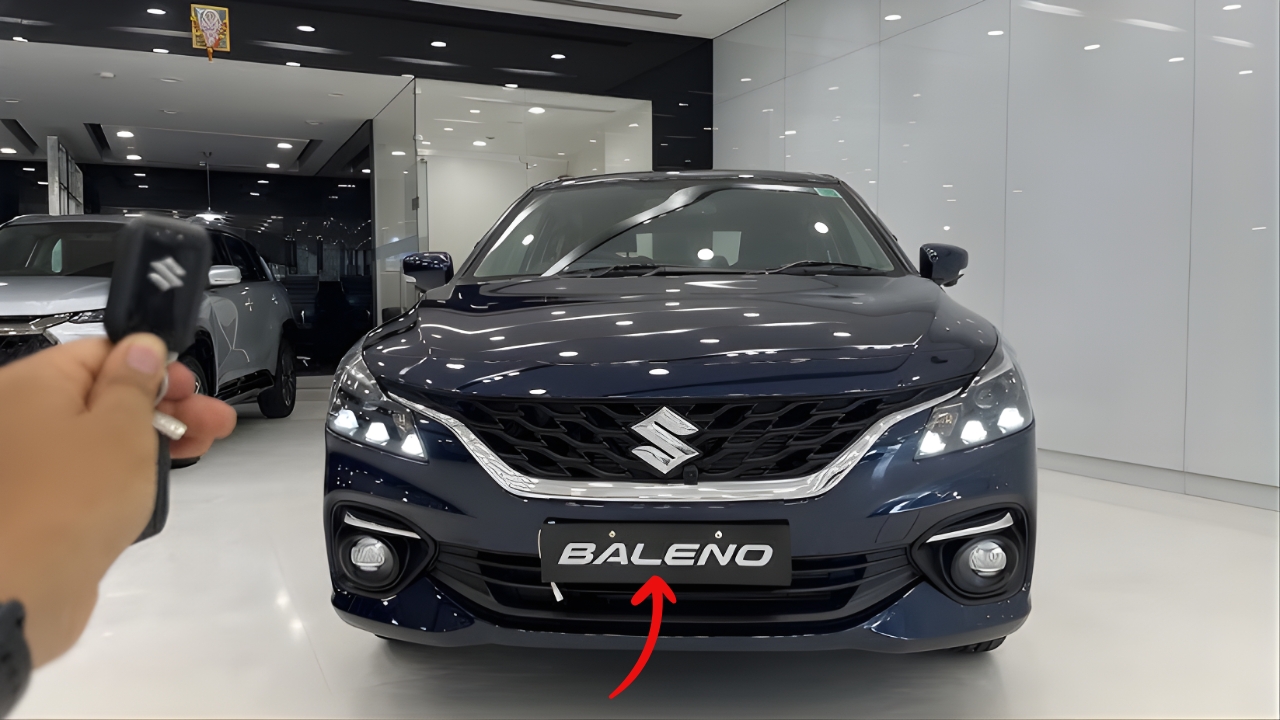
The front of the Maruti Baleno 2026 gets a cleaner grille treatment, slimmer LED DRL‑style projectors and a more chiselled bump‑in line that makes it look wider on the road than its compact length suggests.
From the side, the signature swept‑back silhouette and 16‑inch alloy wheels help it sit tall next to rivals, while the short overhangs and relatively low stance keep it looking agile rather than bulky.
At the rear, you get connected‑style LED tail lamps on higher trims, chrome‑finish garnish and smartly styled reflectors that make the boot lid look broader than it really is.
The design philosophy is clear: mature, clean and office‑car‑respectable by day, with enough neat touches—like subtle badging and well‑proportioned glass area—to not bore the eye.
Cabin Built for Families and Singles
Inside, the Baleno keeps the same minimalist layout but adds soft‑touch inserts around the air‑vents, auto‑climate unit and the top of the dash to delete that hard‑plastic feel many entry‑level hatches can’t avoid.
Dual‑tone upholstery, ambient‑style colour highlights around the centre console and clear fonts on the driver display give a more “small‑sedan minus boot” vibe than usual in this price band.
The 9‑inch “SmartPlay Pro”‑grade touchscreen with wireless Android Auto and Apple CarPlay sits neatly in the dash,
with large‑enough icons and an uncluttered menu structure that older buyers can navigate without swearing. Automatic climate control,
rear AC vents, multiple USB‑type charging points and a thoughtfully arranged centre console make it genuinely usable for daily commutes, short trips and weekend city‑to‑city runs.
Space, Comfort and Daily Usability
On the spec sheet, the Baleno measures about 3,990 mm in length and 2,520 mm in wheelbase, which is just about ideal for Indian city traffic and tight parking spots.
Six‑foot adults fit comfortably in the front, with ample knee and headroom, while the rear can seat three in a pinch; for four, it feels spacious and not upright or cramped.
Boot space sits at roughly 315–320 litres, enough for two ordinary suitcases or weekend grocery runs with a baby seat still in the middle.
The rear seats fold in a 60:40 split, which helps if you ever need to throw in a long piece of flat furniture or a large purchase from the mall,
And the load floor stays mostly flat when folded, so boxes or even a folded‑down mattress don’t roll around.
Engine, Hybrid Duty and Real‑World Mileage
The core of the India‑spec Baleno 2026 is Maruti’s 1.2‑litre K‑series four‑cylinder petrol engine, tuned to anything between 88–90 bhp and around 113 Nm of torque depending on the variant.
Power comes through a 5‑speed manual or a 5‑speed AMT (AGS) gearbox, giving you a safe everyday in‑traffic setup rather than something that feels sporty in the traditional sense.
Petrol manuals usually clock upwards of 22 km/l in real‑world mixed driving while AMT‑equipped Balenos can sneak close to 23 km/l on steady runs, which is excellent for a five‑seater hatchback in this price.
The factory‑fitted CNG version pushes efficiency even higher, with combined fuel‑type figures often touching the mid‑20s to early‑30s km/kg‑equivalent range, depending on load and terrain.
Driving Experience on Indian Roads
On city roads, the Baleno is relaxed enough that stop‑and‑go traffic doesn’t feel like punishment.
The light steering and short‑ratio gearbox make low‑speed parking and tight‑lane weaving relatively stress‑free, and the raised‑slightly suspension keeps it comfortable over potholes and repair patches without feeling bouncy.
On highways, the 1.2‑litre engine feels happiest around 80–100 km/h, where cabin and road noise stay low and the steering feels more composed than expected for this class.
The steering is not razor‑sharp, nor is the ride dynamically exciting, but that’s not the Baleno’s job; it’s built to cover big distances comfortably with low maintenance costs and predictable handling, which it does consistently.
Safety, Technology and Price Sense
In safety, the top variants of the 2026‑cycle Baleno usually pack six airbags, Electronic Stability Program (ESP), hill‑hold assist, ABS with EBD, rear parking sensors and a rear‑view camera,
which is a strong package against competitors like the Hyundai i20 and Tata Altroz in similar budgets. ISOFIX child‑seat anchors and seat‑belt reminders are also part of the current‑generation strength list in India.
On the tech front, beyond the weave‑free touchscreen, buyers get connectivity features like over‑the‑air updates on higher grades,
remote vehicle status apps and basic connected‑car services—nothing too flashy, but enough to keep navigation and music streaming simple and distraction‑minimising.
The Baleno typically starts around ₹5.99 lakh (ex‑showroom) and stretches above ₹9–10 lakh for fully loaded petrol and CNG trims, putting it firmly in the “practical premium” hatchback zone.
Also read this : Hyundai Grand i10 Nios – Sporty design hatchback with powerful engine at price of ₹4 Lakhs
Who Should Actually Buy the Maruti Baleno 2026?
If you are a young professional, a small family, or a couple that does mixed city‑highway runs and values space over outright performance, Baleno fits better than most compact hatchbacks in India.
It is most attractive to buyers who prioritise low running costs, reliable hardware, good mileage and a cabin that feels grown‑up enough for business errands yet practical enough for school‑runs and weekend trips.
The Baleno does not aim to be sporty, flashy or ultra‑luxurious, but it does aim to solve India‑specific problems—easy parking, tight‑lane driving,