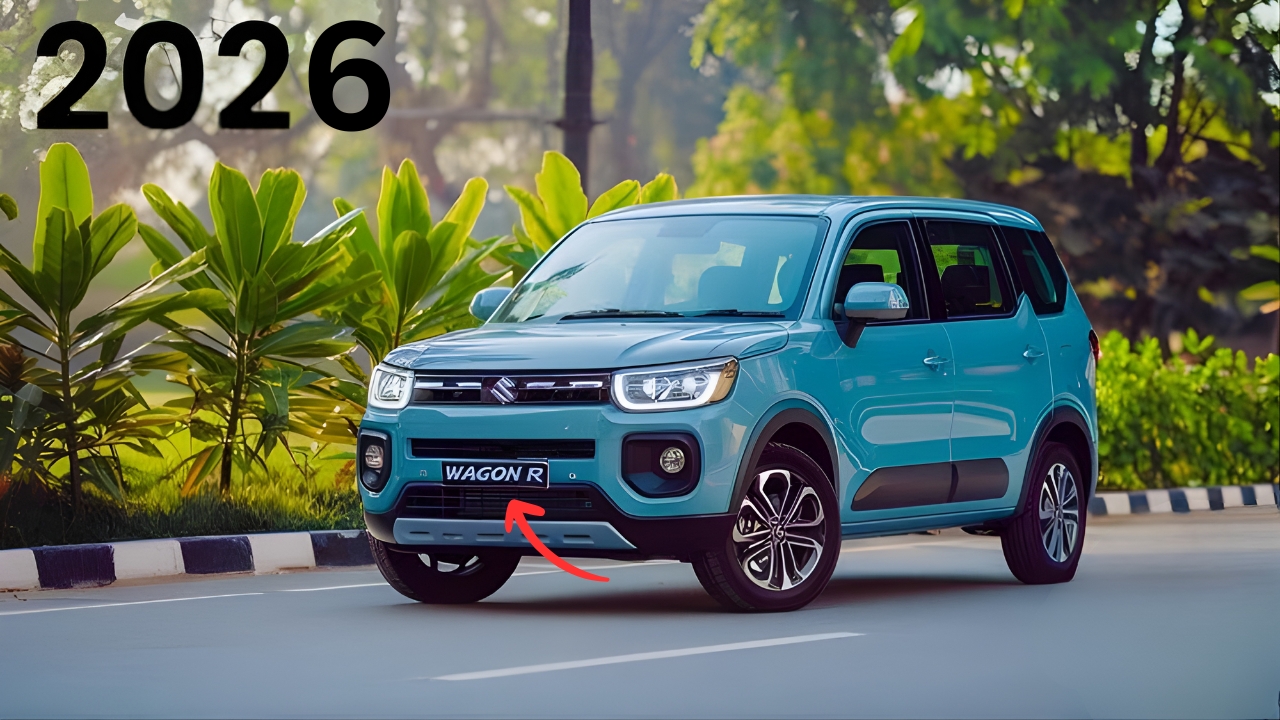
Maruti Wagon R : The Wagon R has stayed popular in India because it prioritizes what most city buyers actually need: easy access, good visibility, and a cabin that feels roomy for its footprint.
Its tall-boy stance isn’t about styling drama; it’s about making daily driving less tiring, especially in stop‑go traffic and tight parking spots.
Pricing that keeps it in the conversation
One reason the Wagon R remains a default shortlist car is its approachable entry price.
Ex‑showroom pricing commonly starts around ₹4.99 lakh, with higher variants going up into the ₹6–7 lakh range depending on trim and transmission.
That spread matters because it lets buyers choose between “basic and sensible” and “fully loaded for the segment” without jumping to a larger, costlier hatchback.
Two petrol engines, one clear choice for your usage
Maruti Suzuki offers the WagonR with two petrol engine options: a 1.0L and a 1.2L. In plain terms, the 1.0L is the calm,
Efficiency-first pick for mostly urban use, while the 1.2L suits drivers who regularly carry a full load or do more highway stretches and want stronger response.
The 1.2L’s appeal is also linked to its higher output figures (commonly listed around 91 PS and 114 Nm on specifications pages), which helps it feel less strained when you’re climbing flyovers with the AC on.
Factory CNG option the running-cost argument
For buyers with high monthly running, the factory-fitted CNG option is a big part of the WagonR story, and it’s offered with the 1.0L engine.
The logic is straightforward: if your daily route is fixed and you have dependable CNG access, the fuel savings can outweigh the compromises, such as reduced boot usefulness due to the cylinder.
Manual or AMT convenience vs involvement
Depending on variant and engine, the WagonR is sold with manual and AMT options.
If your driving is mostly in crowded city traffic, the AMT’s convenience can be the single biggest quality-of-life upgrade, even if it doesn’t feel as smooth as a conventional automatic.
For mixed driving, a manual can still feel more predictable during quick overtakes and steep ramps, especially if you prefer controlling shifts yourself.
Safety the update buyers were waiting for
Safety expectations in this segment have moved fast, and the WagonR has seen meaningful changes.
Autocar India reported that the 2025 WagonR was updated with six airbags across the range, along with additions like three-point seatbelts, while also continuing with basics such as ABS with EBD and ESP.
For a family car, this kind of “standard across variants” update is important because it reduces the pressure to buy the top trim just to get core protection.
Features and variants choosing what actually matters
The WagonR is sold in a wide variant spread, commonly listed around 11 variants across petrol and CNG combinations. That sounds complicated, but the practical approach is to decide your priorities first:
If budget is strict, focus on the variant that covers essentials like AC, power features you’ll use daily, and the safety equipment you won’t compromise on.
If you keep cars for many years, consider stepping up to a trim that improves day-to-day comfort and convenience, because small upgrades can matter more over time than cosmetic additions.
Also Read This : TVS Jupiter 110 Dhansu features and look is Gajab for Girls – mileage is 75 Kmpl
What the Maruti Wagon R is best at—and what it isn’t
The WagonR’s strengths are clear: city maneuverability, a space-efficient cabin layout, and a value-led ownership proposition that appeals to first-time buyers and small families alike.
Where you should be realistic is driving feel at higher speeds and the “premium” factor—this car is designed to be sensible first, not sporty or plush.
If your routine is mostly urban, though, that sensibility is exactly why it works.